
Tracking Erie County Recent Arrests
Erie County posts no single official list covering only the past day's arrests. The strongest recurring source is the Sheriff's current Inmate List PDF. That file answers a narrower question. It lists who is in custody at the Erie County Holding Center or the Erie County Correctional Facility at the moment the file was generated. So it may hold old booking dates and skip a recent arrest entirely. Why? An appearance ticket can keep a name off the list. So can a quick release, a city lockup, a transfer, or another custody system. Booking dates carry their own quirk. One marks entry into county jail. That entry may follow a local arrest, a court commitment, or a transfer. Charges and court results never appear in the file. So treat each entry as a custody lead rather than a full story about the alleged event.
| Time window | Best available source | Safe use |
|---|---|---|
| Same day | Current ECSO roster as a fallback | Current listed custody, not a complete 24-hour arrest list |
| Several days | Official roster plus BuffScan | Unofficial date grouping, with known gaps and no completeness claim |
| Selected incidents | ECSO News and local reporting | Story-level context, not every arrest or booking |
The dedicated 24 Hour Arrests page digs into that same-day limitation, while the Arrest Log pulls back to the wider, date-grouped view. One habit matters most: always open a fresh source. A saved image is not live data.
Erie Arrest Roster Fields
Erie County's roster is sparse but useful. It lists five core facts. Each one has a catch. The ICN is a county identifier, not a statewide criminal-history number. The facility field shows where a person sits now, never where the arrest happened. And the booking date gives no exact arrest time. Those narrow fields make the roster strong for confirming custody but weak for explaining the underlying event.
| Roster field | What it establishes |
|---|---|
| ICN number | A county identifier useful for matching and a focused records request |
| Inmate name | The name used on the current roster; verify identity with care |
| Date of birth | A matching field that should not be republished without need |
| Facility | ECHC or ECCF as the current listed county location |
| Booking date | The date tied to county intake, not necessarily arrest or arraignment |
Plenty of fields are missing here: charge, arresting agency, bond, court date, release information, disposition, and booking photograph. The agency or court that owns those facts is where to find them. The Jail Management Division source lays out how the two-facility system fits together, and the same page offers a clear view of the ECHC and ECCF system.
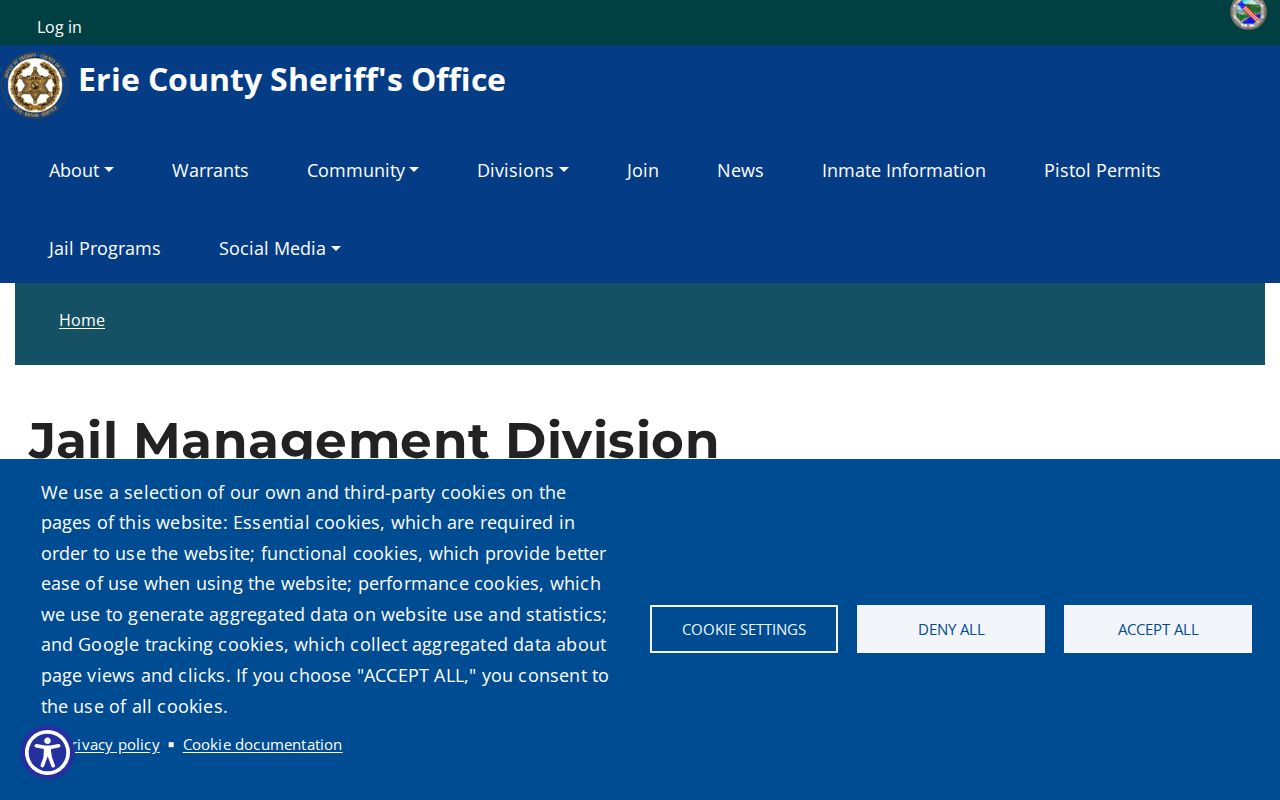
That page is fine for learning the facilities. For a live roster entry, though, the current PDF is still the source to check.
Search the Erie County Roster
The roster is a static PDF, not an interactive inmate search. Download the newest copy and note its generated timestamp first. Then search the text for the full surname. From there, compare the whole name, date of birth, facility, booking date, and ICN. Do that before drawing any conclusion. A similar name alone proves nothing. Let the ICN and facility settle the match. Then there is no need to repeat a full date of birth.
- Open the official Inmate List PDF through the Sheriff’s site and refresh the file.
- Record the generation time before reading any entry as current.
- Search by name and compare the published fields, especially ICN and facility.
- If no entry appears, check the arresting agency, court, VINE, or Sheriff contact path.
One generated copy carried a 2:40:03 a.m. timestamp from September 10, 2026, yet still listed bookings from earlier dates. So the document is clearly not a one-day feed. It says nothing about a fixed update cycle, though. How soon does a new booking appear? Erie County does not say. Nor does the county state exactly when a released person drops off the list.
Two Erie County Custody Facilities
The Erie County Sheriff's Jail Management Division runs two detention sites. Their stated combined capacity is 1,380 beds. The Erie County Holding Center sits at 40 Delaware Avenue in Buffalo, reachable at (716) 858-7638. The Erie County Correctional Facility is out at 11581 Walden Avenue in Alden. Its listed phone is (716) 937-9101. The roster's facility field can split an ECHC listing from an ECCF listing. It cannot name the arrest scene, the police department, any alleged charge, or the court. Buffalo Police, Amherst Police, Cheektowaga Police, the Sheriff, or another agency can each land a person in county custody. Each takes a different path. Movement between the two sites does not signal a new arrest. It signals no shift in the case either. What does "booking" mean? Booking is the administrative step after an arrest or court commitment. It records identity and custody details. It is separate from arraignment. That is where a person first appears before a court. Booking is also separate from disposition, the case's outcome.
Where Erie Arrest Records Appear
No single page gathers every Erie County recent arrest, mugshot, charge, and case result in one place. Start with official custody and court sources. News outlets and private publishers come second. Their coverage windows, dates, correction rules, and update pace can drift from the government record, so treat them as leads rather than the last word.
| Channel | Photo? | Status and use |
|---|---|---|
| ECSO roster | No | Official current county-custody snapshot |
| ECSO warrant search | Photo column | Official wanted status, not current booking or guilt |
| ECSO News | Varies | Official selected incidents, not a full feed |
| Courts and County Clerk | Not a photo source | Official charge progress and disposition, subject to limits |
| WKBW and local news | Story dependent | Editorial selection; confirm against the source agency |
| BustedNewspaper or Mugshots.com | Often | Unofficial copies that may be stale or incomplete |
BustedNewspaper's Erie page loads only intermittently. Its freshness and city coverage are no sure bet. Mugshots.com keeps a county-local page, but its entries stay third-party reproductions. RecentlyBooked's New York directory shows no Erie County section at all. And never grab an Ohio Erie County page by mistake. The one you need is in New York.
Erie Arrest Alerts and Tips
The ErieCo Sheriff app handles alerts and tips. It is not a booking-photo gallery. Both the Apple listing and the Google Play listing describe anonymous tip submission, public-safety alerts, and links to agency web and social channels. Those features can help with public notices in Erie County. What the app does not offer is a full arrest archive, a roster search, or current mugshots from Erie County bookings.
Users can check the ErieCo Sheriff app listing for details.
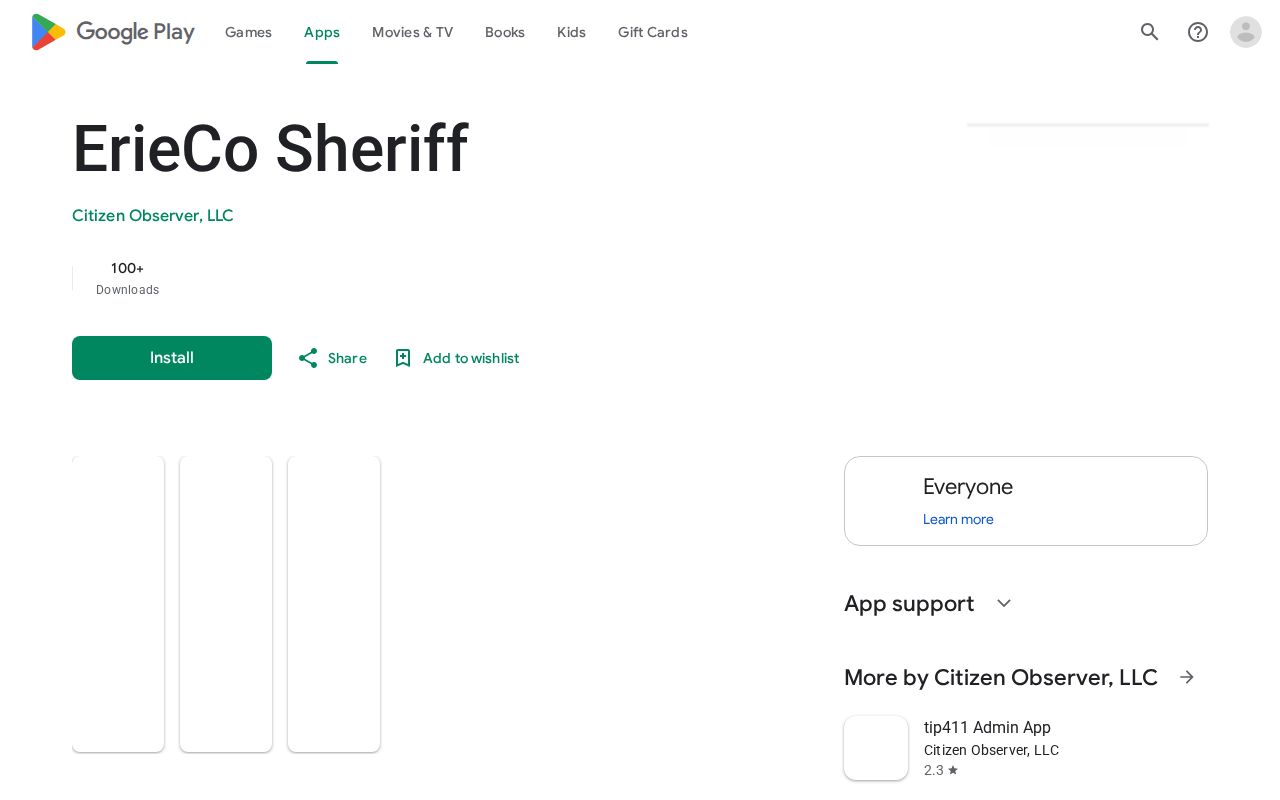
Alerts announce. They do not document a case. For one person's custody changes, Erie County's VINELink deployment beats any app alert, since a sheriff post may never mention the arrest at all. The dedicated VINELink Check walks through the county search and notification route. Sheriff news and social posts stay selective. Treat them as headlines, and let the roster and court files carry the facts.
Erie County Arrests by City
City arrests and county bookings answer different questions in Erie County. Buffalo Police runs arrests through Central Booking. Cases needing continued custody can move into the Sheriff's system. Buffalo also leans on appearance tickets. Some arrests there never touch a county roster entry. Amherst Police and Cheektowaga Police keep their own records routes, and neither posts a complete municipal arrest feed.
- Buffalo Recent Arrests: Buffalo Police, Central Booking, appearance tickets, and county transfer.
- Amherst Recent Arrests: Amherst Police records, Town Court, and ECHC custody checks.
- Cheektowaga Recent Arrests: Cheektowaga Police FOIL, town court records, and county custody.
Match the request to the custodian. A city arrest report belongs with the police agency that made the arrest, while a county booking record sits with the Sheriff. Court records then tell the story after charging. A blank county-roster search does not mean a local arrest never happened.
Understanding an Erie Arrest Record
A booking file can hold more than the public roster shows, and access hinges on the record type plus New York law. So name the record you need. An incident report describes the reported event; a booking record documents jail intake; a photograph records identification; a court docket tracks the case. One request can chase four custodians when everything gets labeled an arrest record.
| Needed fact | Best Erie County path |
|---|---|
| Current jail location and ICN | ECSO Inmate List PDF |
| Arrest time, agency, or incident | Arresting agency report or FOIL request |
| Charge, arraignment, or disposition | WebCriminal, local court, or County Clerk |
| Bond or bail status | Current court or holding facility |
| Booking photograph | ECSO or arresting agency request, if retained and releasable |
A few terms do heavy lifting. Arraignment is the first court appearance on a charge, and bond covers release while the case is pending. Disposition is the result, whether dismissal, plea, or verdict. Keep the stages apart. Charges entered at booking can shift before arraignment, then again before disposition.
Erie County Mugshots and Photos
The official Erie County roster shows no booking photographs. That describes the public PDF, nothing more. An agency can still take and retain photos. The Sheriff's fee schedule lists photographs as a request category at $25 each. A listed fee means a releasable record can be processed. It guarantees no release, no retention, and no right to online publication.
New York State DOCCS is not a mugshot gallery either. Its inmate lookup returns state-prison fields such as DIN, custody status, facility, received date, county of commitment, conviction details, and release information. There is no public photo field. A recent ECHC or ECCF booking stays off DOCCS regardless of the state lookup.
Private photo pages may copy material without reflecting a later release, dismissal, sealing order, or corrected identity. Check them last, and check the source date. Booking photographs, wanted images, and galleries of people are not hosted or rehosted here.
Request Erie County Arrest Records
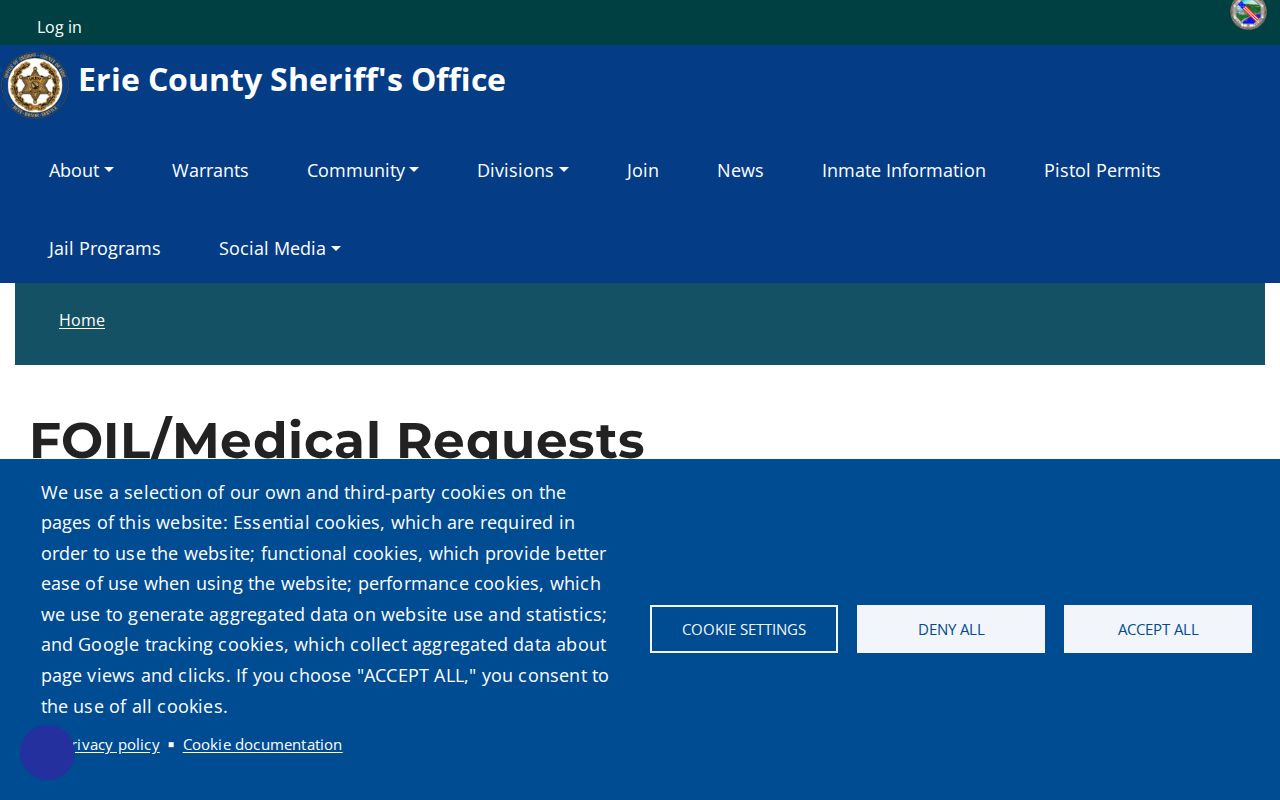
Records requests start on the Sheriff's FOIL and medical requests page, which routes to the Professional Standards Division, Attention: FOIL Officer, 40 La Riviere Drive, Suite 140, Buffalo, NY 14202, or psdfoils@erie.gov. Use the official form. Include the incident number, type, date, time, and location, plus full name, date of birth, booking date, facility, and ICN when known. Medical requests follow a separate HIPAA process.
- Identify whether ECSO or a municipal police department owns the record.
- Submit a written, neutral description under New York Public Officers Law Article 6.
- Ask for the booking record and photograph only “if retained and releasable.”
- Keep the request, acknowledgement, fee notice, production, denial, and appeal record.
The clock runs fast. ECSO must grant, deny, or acknowledge a FOIL request within five business days, and an acknowledgement may set a later reasonable response date rather than promise production inside five days. The ECSO schedule prices 25 cents per page, $15 for an incident or investigation report, $15 for a certified copy, $3 for CD or DVD, $18 for a thumb drive, and $25 per photograph. Requests needing at least two hours of employee time can carry actual-cost charges. Payment still does not guarantee disclosure. The official request page shows the ECSO records custodian and request route.
Precise identifiers matter because ECSO does not automatically hold every municipal incident report. Amherst offers a local caution. Its records page says the usual public copy may be a short summary, not the full report. So a request should not promise more. Buffalo records go through the city's NextRequest portal when BPD owns the record. Cheektowaga police records use the department's FOIL form or the town process.
New York Arrest Law and Removal
New York treats government records as open by default. FOIL builds that presumption in. Still, it bends for real reasons. Privacy concerns, open cases, officer safety, confidential methods, and sealing each justify withholding or redaction. Nothing in current New York law forces every booking photo into public view. No statute bans charging for mugshot removal either. Bills get proposed. A proposal is not law until passed.
Sealing changes the picture. CPL 160.50 applies when a case ends favorably, and its consequences expressly cover arrest photographs and identification records. CPL 160.55 handles certain noncriminal outcomes. Under CPL 160.59, a person with an eligible older conviction can ask a court for sealing, though exclusions and conditions apply. One caution applies. Sealing a case does not erase copies already held elsewhere.
Want a correction or removal? Start with the court disposition and the source agency. Save the copied URL, a screenshot, the source date, any court order, and the agency's response. Then approach the publisher under whatever free policy it currently offers. Mugshots.com lays out a court-document path and states it takes no payment for removals, which is a private policy rather than New York law. RecentlyBooked also says it charges nothing, yet it carries no Erie County section. Never assume a private page is current.
Paying a removal vendor accomplishes nothing official. It does not seal a case, touch the court file, or scrub copies held elsewhere. A demand for money can even be deceptive. Keep it and get legal advice. Search-engine outdated-content tools only help once the original source has changed or vanished, and they affect results pages, not the record itself.
How Long Erie Records Remain
No single retention rule fits an Erie County arrest record or mugshot. Retention depends on the record type. The New York State Archives schedules incident logs, identification files, case investigations, warrants, and booking audio or video separately. Legal holds and sealing can stretch or shorten a schedule. The Sheriff's public roster names no fixed point when a released person's name drops off. The State Archives retention page points to the LGS-1 schedule. It must be read category by category.
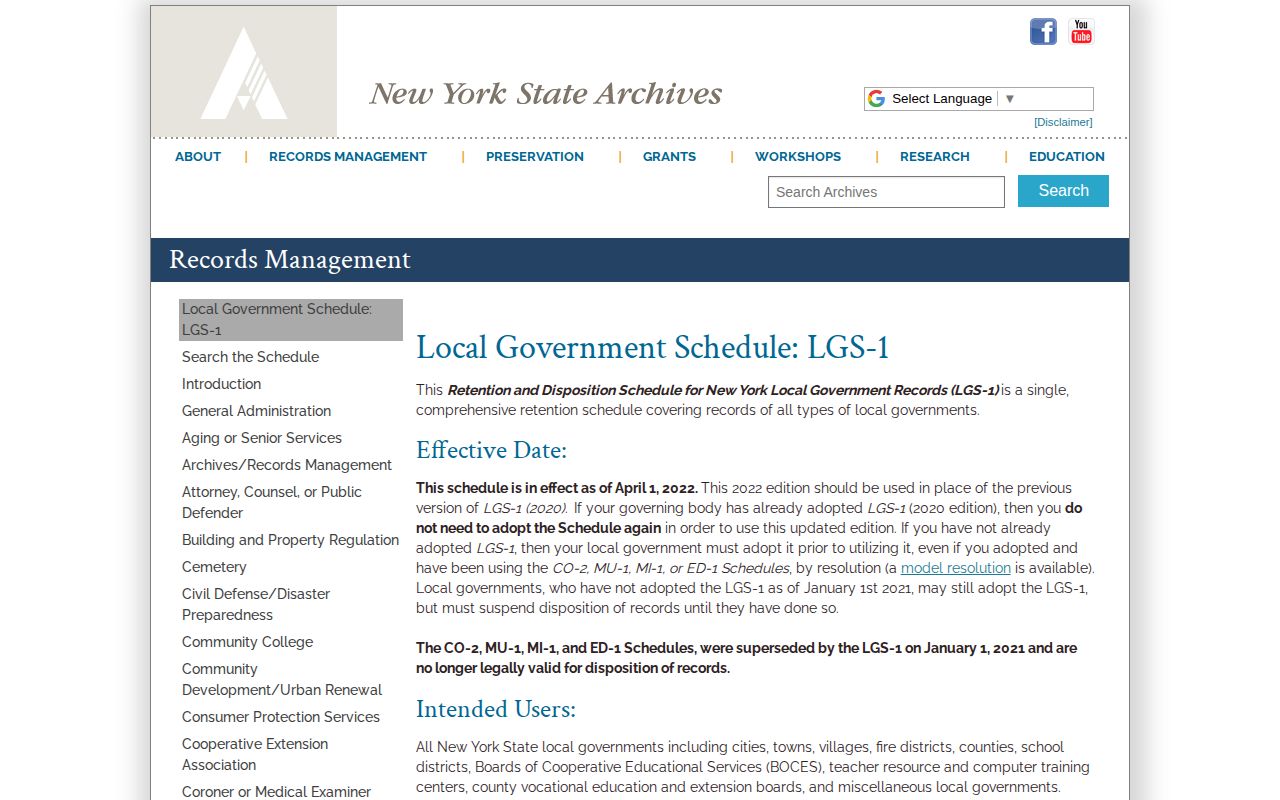
That schedule governs records management. It promises nothing about a mugshot staying public online.
For a recent file, ask ECSO or the arresting city or town first. Older court matters go through the Erie County Clerk. Court records there run from 1957 forward. Older material back to 1830 is retrievable by request. Retrieval can take five to seven business days. The State Archives does not automatically hold a recent booking photo. Historic Erie County Sheriff jail registers from 1909 through 1963 sit at Bowling Green State University. They remain archival records, not a live arrest feed.
Note: Before concluding anything from an empty search, ask the holder whether that series is retained locally, transferred, sealed, destroyed, or restricted.
Erie Arrest Warrants and Wanted Status
The official ECSO warrant search lets you filter by last name and warrant date. You can also set reason and results per page. Table rows can include a photo, name, and last known address. They may also show description, date received, warrant number, and reason. Read the dates carefully. "Date received" may match neither the offense date nor the posting date. The image is a wanted-list photo, not a current jail mugshot. The official page displays the Erie County warrant search fields and safety instructions.
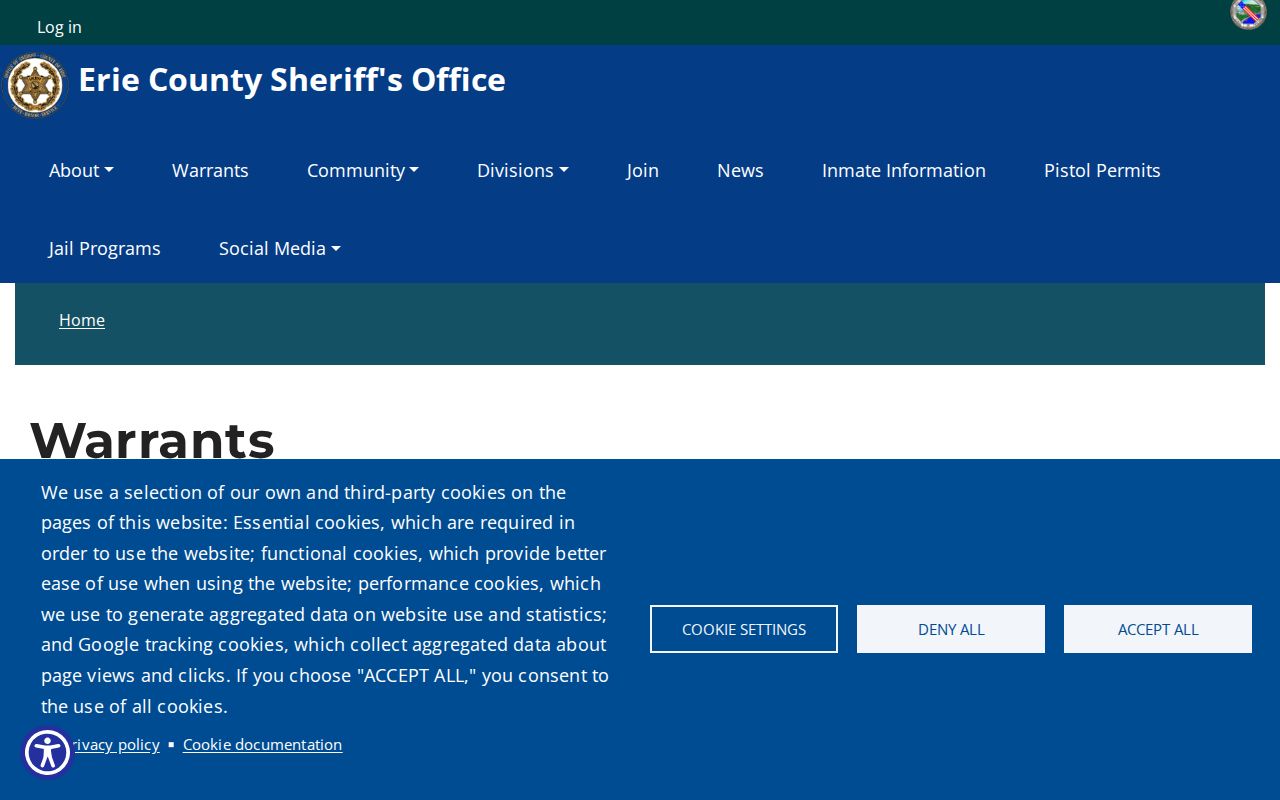
This search answers one question: wanted status. It says nothing about current custody or how a criminal case ended.
Erie County posts no separate most-wanted gallery or recurring Warrant Wednesday archive. The Sheriff does say one thing. Warrant information gets regular monitoring. Corrections go to the Warrant Office at (716) 858-3287. Call during weekday business hours. To report information, call (716) 858-2903. Emergencies belong at 911. Never approach, follow, confront, or try to detain anyone listed. An attorney or the issuing court is the right route for your own warrant.
After an Erie County Arrest
Booking is only the start. The court creates the rest of the record. The Erie County Clerk keeps closed felony records from New York Supreme Court and Erie County Court. City and town courts hold many lower-court matters. WebCriminal tracks current cases in Erie County Court and Buffalo City Court. Entries can lag a day or two. Sealed cases, youthful-offender matters, and cases not yet entered may simply not appear.
The stages stay distinct. Arrest comes first, then booking and identification. Next come arraignment, possible bail or remand, later court events, and final disposition. "Remand" means custody without bail at that stage. A "detainer" is a hold requested by another authority. If a case moved between courts, ask the final court for its certificate of disposition.
Rosters shrink fast. Someone booked and released often vanishes from a current-custody list. Agency and court records live on. A state prison sentence puts the person in the DOCCS inmate lookup. Federal custody points to the Bureau of Prisons locator, which shows no county booking photo. ICE runs its own identity-based detainee locator with limited coverage. None of these systems substitutes for another. Absence from one proves nothing about whether an arrest happened.
Verify Erie County Arrest Records
Verify an Erie County arrest record at the office that owns it. The sheriff roster shows who is in county custody right now. For an incident detail or a booking photo, contact the agency that made the arrest. Charges live with the court. Wanted status lives with the warrant search. VINE will send you alerts on any eligible custody changes. Always check the date and source label. A saved capture or unofficial page can offer context, but it never replaces a fresh official record.
Erie County Sheriff’s Office Location and Directions
Public Record Search
Sponsored Results